An open lid
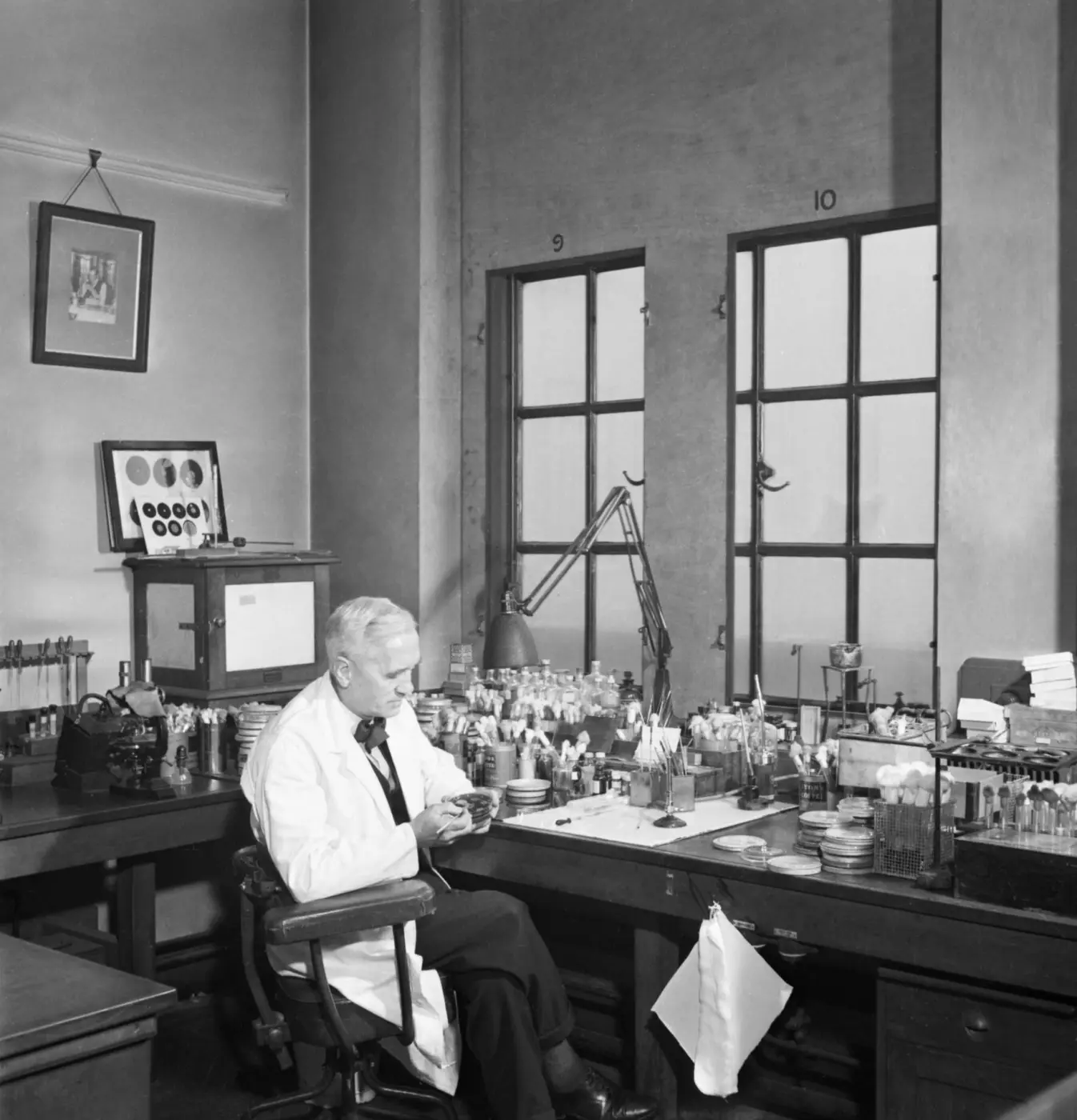
At the end of July 1928, Alexander Fleming left culture plates with staphylococci in his London lab. When he returned on 3 September, a blue-green mould had grown on one plate with an open lid. Around the mould, no bacteria were growing.
For years, nobody got further
Fleming named the active substance penicillin, but in his lab work on it stopped in 1929. Only from 1939 did a team in Oxford led by Howard Florey, which included Ernst Chain, study the substance. It found ways to grow the mould and to purify and store penicillin.
The Oxford policeman
In 1941 the policeman Albert Alexander in Oxford was given penicillin for a severe facial infection. After just one day he was getting better. But there wasn't enough penicillin, even though it was recovered from his urine. In early March he relapsed, and on 15 March he died.
Your guess
Where did the best mould for mass production come from?
Nobel Prize
In 1945 Fleming, Florey and Chain shared the Nobel Prize in Medicine. After the war ended, penicillin became widely available.