Just swollen?
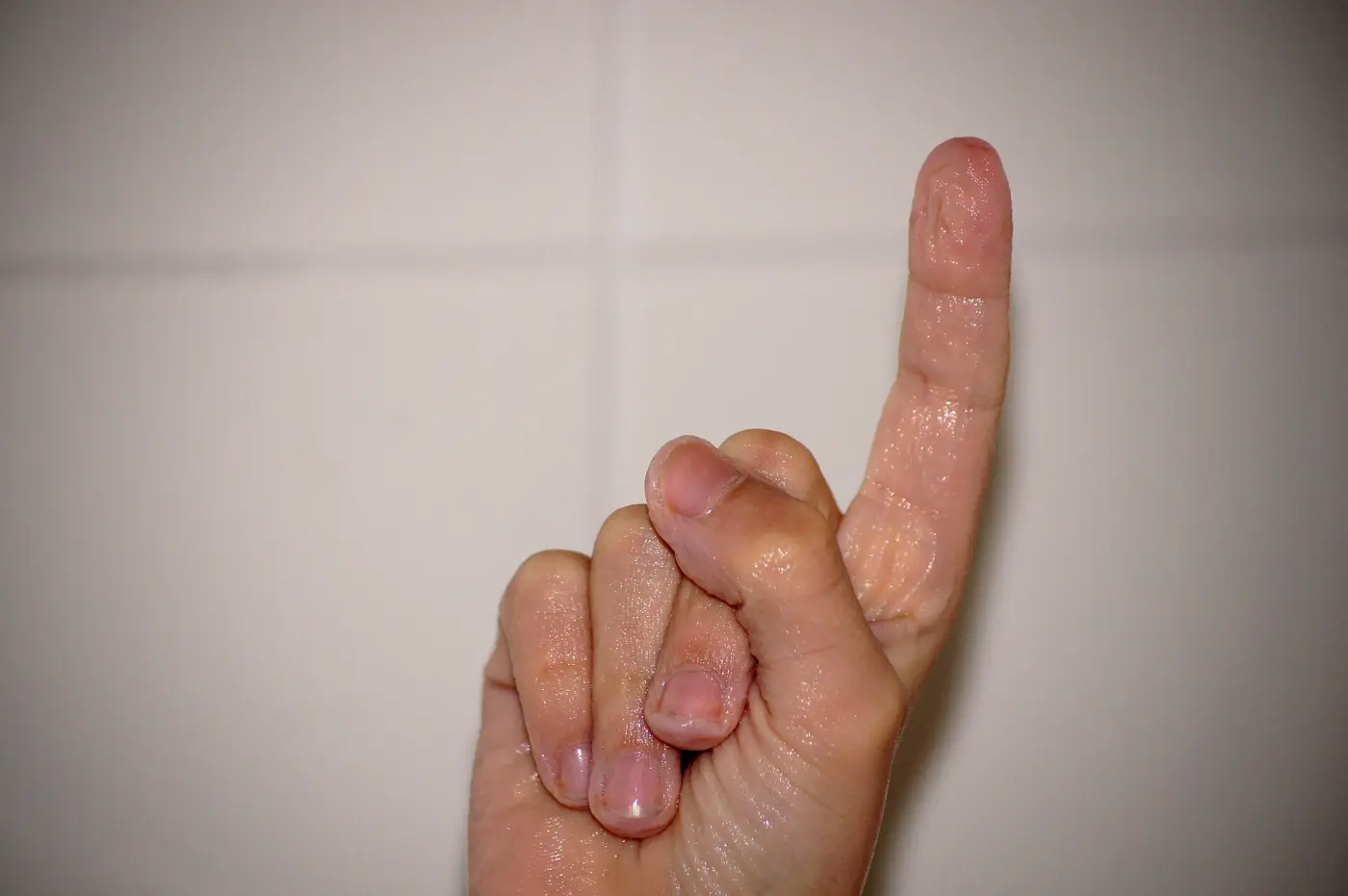
When hands and feet stay in water for a long time, their hairless skin wrinkles. People often say water seeps into the outer layer of skin and makes it swell up. But since the 1930s researchers have known of an observation that doesn't fit.
Your guess
What happens in warm water to a finger whose nerve has been cut?
The blood vessels constrict
Wrinkling is an active process. It is controlled by the autonomic nervous system, which also regulates breathing and heartbeat. The leading explanation: blood flows more slowly in the fingers, because the vessels narrow. The fingertip loses volume, and the skin on top is pulled inwards and folds into wrinkles.
Treads like a car tyre?
In 2011, neurobiologist Mark Changizi suggested the wrinkles are rain treads: like the grooves in a tyre, they channel water away and improve grip. In 2013 a team from Newcastle tested the idea. With pruney fingers, volunteers moved objects under water more quickly. With dry objects, the wrinkles made no difference.
What's still open
In 2014 a team at the Max Delbrück Center in Berlin repeated the experiment with 40 people – and found no advantage. The wrinkles did not help with handling wet objects and did not change the sense of touch in any of the aspects measured. So whether they aid grip is disputed. According to the team, little is known about their physiology and purpose.