Quick & curious · Space

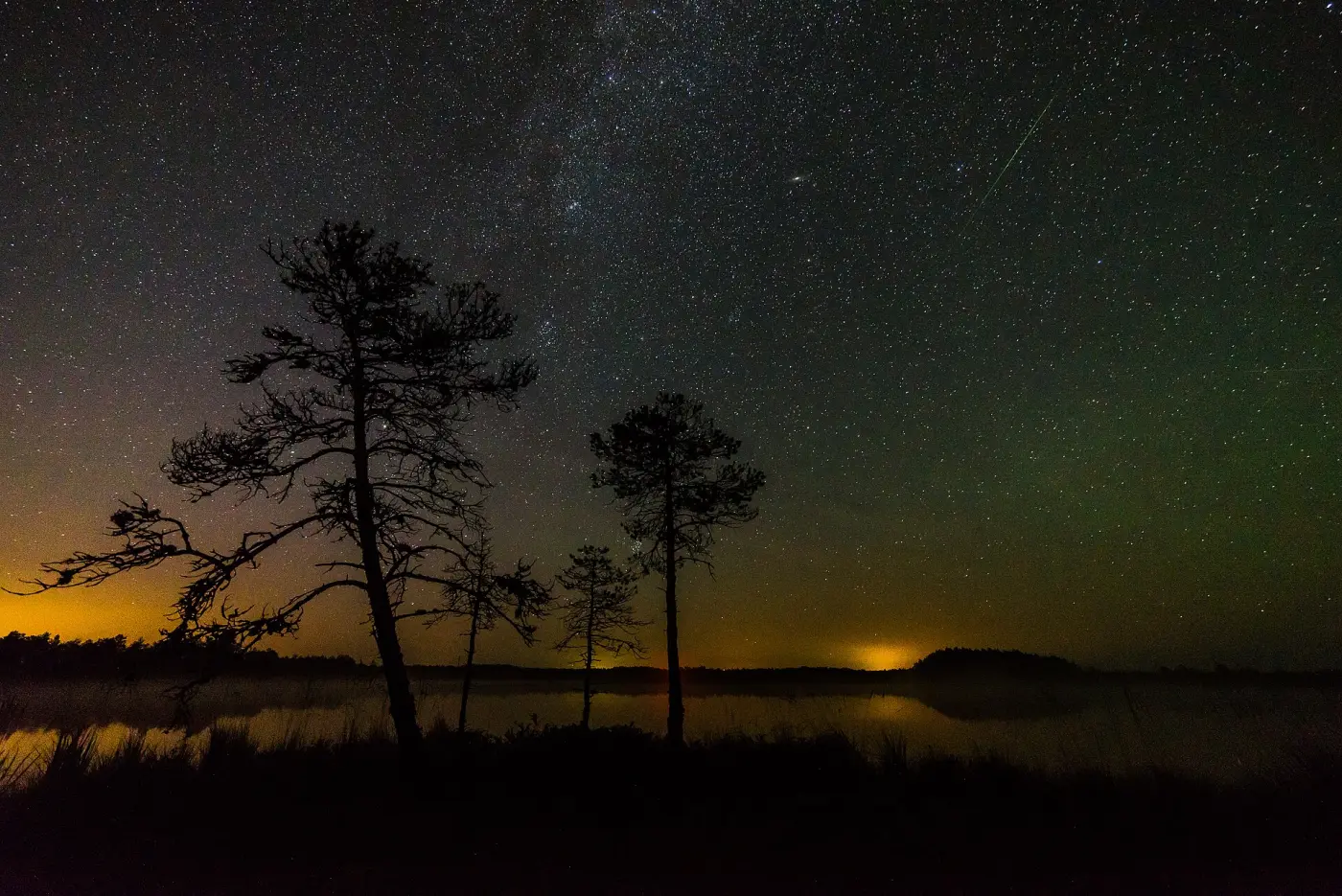
Many shooting stars are barely bigger than a grain of sand.

Night sky over a bog in Estonia with silhouetted pine trees; top right, a Perseid streaks past as a thin line
Photo: Martin Mark · CC BY-SA 4.0 · Original

The story behind it

They hit the atmosphere at 11 to 72 km per second (roughly 40,000 to 260,000 km/h). Comet dust mostly burns up before it reaches the ground. Most meteor showers happen when Earth crosses a comet's dust trail: every Perseid is a tiny piece of comet Swift-Tuttle.
Sources

Every statement in this discovery is backed by one of these sources and was checked before publication.

  1. American Meteor Society: Meteor FAQ (accessed 2026-10-25)
  2. NASA Science: Meteors & Meteorites Facts (accessed 2026-10-25)
  3. Wikipedia: Meteor shower (accessed 2026-10-25)