.jpg)
Recordings from the savanna
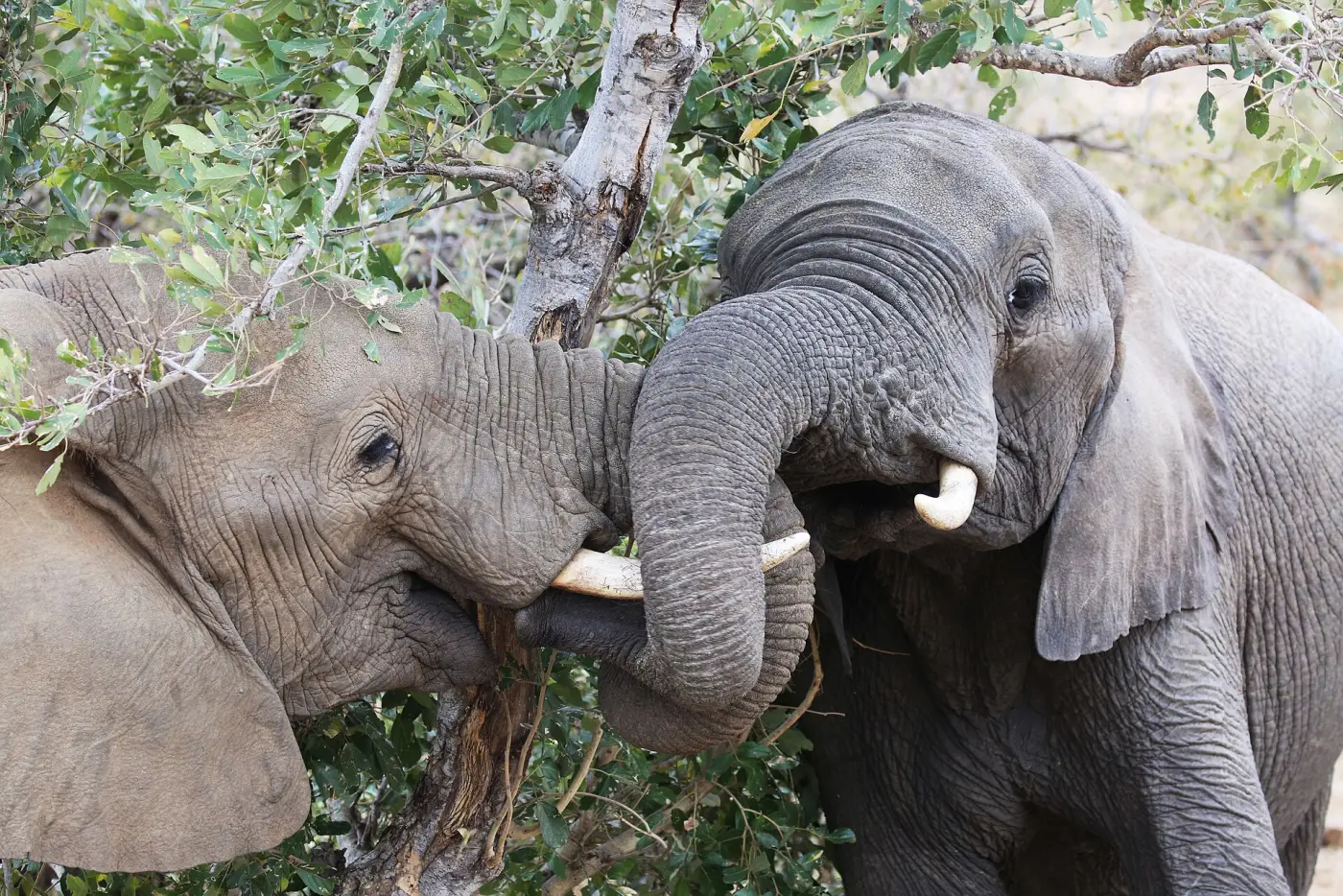
A team led by Michael Pardo of Colorado State University followed wild elephants in Kenya. They recorded about 470 calls from 101 animals and noted whom each call was meant for. The analysis focused on the "rumble": a deep thrum, partly below the range of human hearing.
Software listens in
27.5%of calls matched to the right recipient – well above chance
A rumble carries a lot at once: who is calling, how old they are, what mood they're in. A name would be only a small part of it. So a machine-learning model had to work out, from the sound alone, whom a call was meant for. And one elephant's calls to the same recipient were more alike than its calls to others.
The loudspeaker test
Next, the researchers played 17 elephants a recorded call that had originally been addressed to them. On another day they played a call from the same caller to a different animal. On hearing their own "name", the elephants called back sooner and were more likely to approach the speaker.
Your guess
Dolphins address each other by copying the other's signature call. And elephants?
What's still open
No one yet knows where in the call the name sits – it hasn't been isolated. It's also unclear whether different elephants use the same name for the same animal. And names don't come up in every call: more often over long distances or when adults call to calves.
Deep dive
Four decades of listening
The biologist Joyce Poole has been studying African elephants since 1975. She noticed that an elephant would sometimes call out to its kin – and sometimes many would answer, sometimes only one. She suspected elephants directed calls at particular individuals but had no idea how to prove it. The study combines recordings from the Samburu and Buffalo Springs reserves made from 2019 to 2022 with archival recordings Poole made in Amboseli from the 1980s to the 2000s. Three kinds of rumble were analysed: contact calls to an unseen family member, greeting calls at touching distance and caregiving calls to a calf. These were where the researchers most expected to find a name. Rumbles are deep, partly inaudible to us, also travel through the ground and last from half a second to 12 seconds.
Continues in the app
- How a machine looks for names
- Frida, Donatella and Rothko
- A call from the loudspeaker
- Who else has names
- Learned, not innate
- The objections
- Names for places?
- Quiz with 4 questions
- 3 key points to keep