Your guess
Which light stimulates only the medium cones (M) in your eye?
A laser instead of a lamp
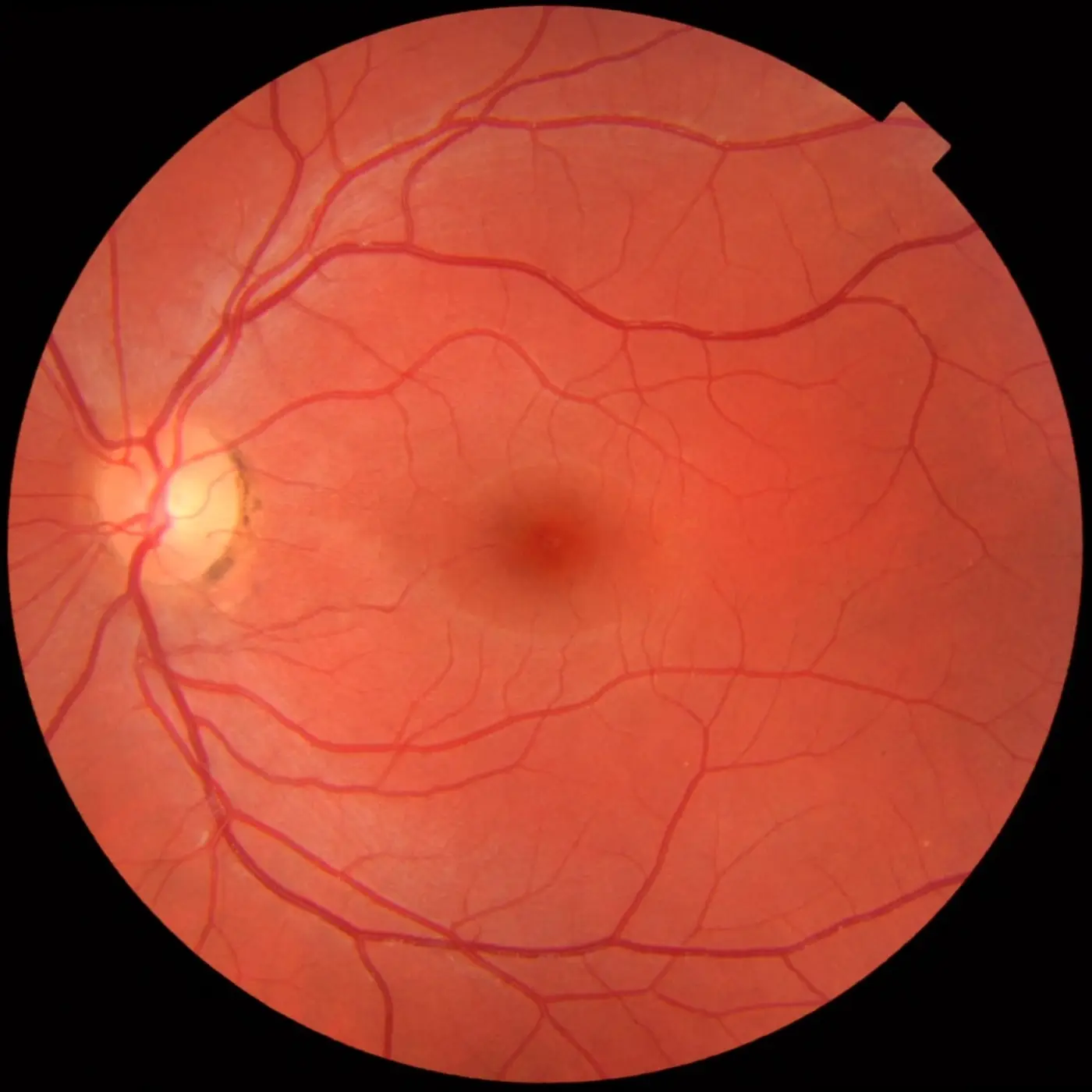
The team led by Ren Ng and Austin Roorda first mapped a small patch of each subject's retina, cone by cone. A laser then scans across it and fires only when it is aimed at an M cell. An infrared camera tracks every movement of the eye. The image is the size of a fingernail at arm's length.
More saturated than any spectral color
The subjects described olo as blue-green of unprecedented saturation. The most saturated natural colors are pure spectral colors such as laser light. To match olo to the closest one, they first had to dilute it with white. When the laser was deliberately aimed slightly off target, they saw only the laser's ordinary green.
What's still open
So far only five people have seen olo, and three of them are co-authors of the study. Nor is it perfectly pure: some of the light hits neighboring cells. Some experts consider it debatable whether olo is really a "new" color.
Deep dive
Three cones, three numbers
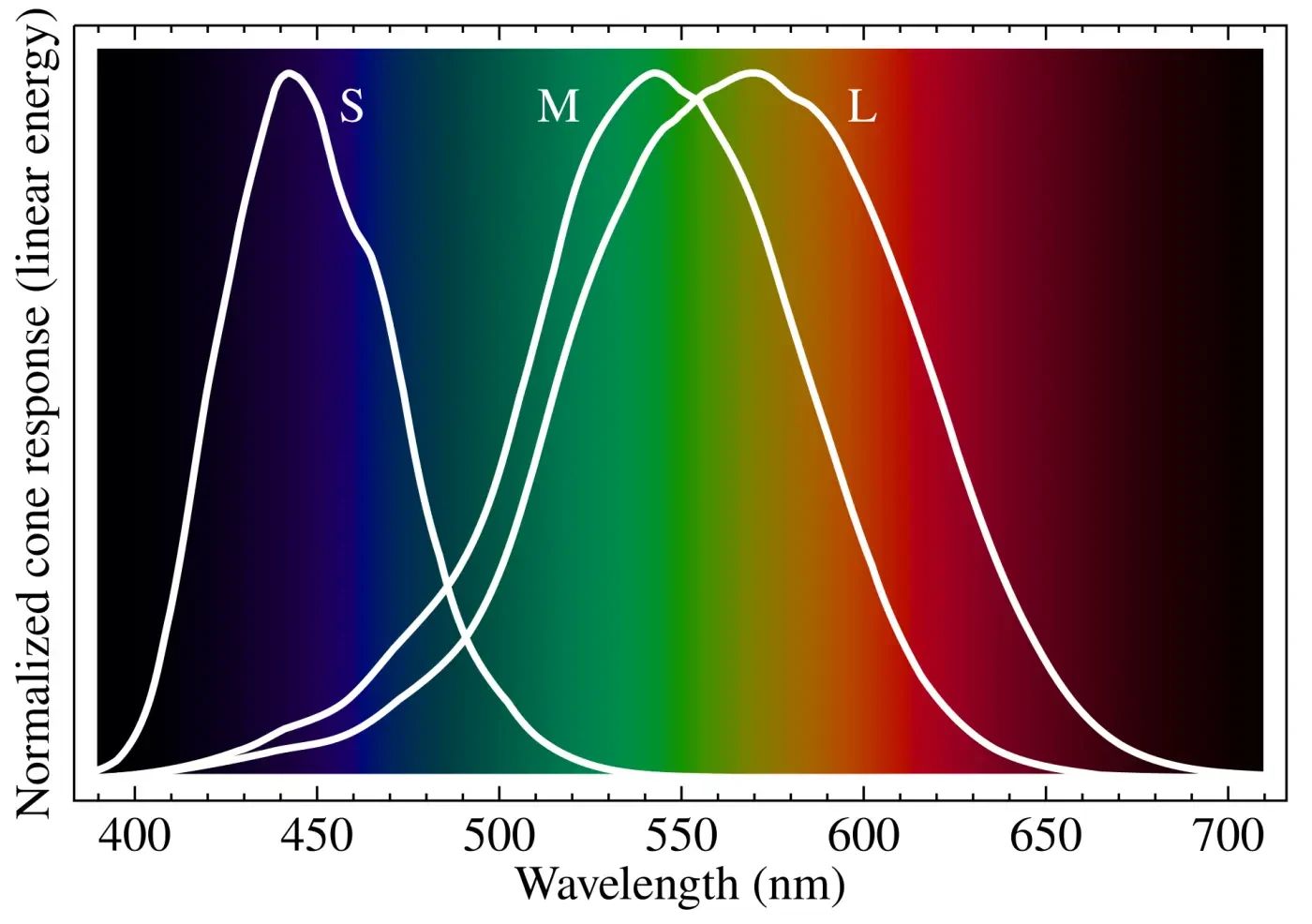
Color starts with six to seven million cones in each eye. There are three types: L cones respond most strongly at about 560 nanometers, M cones at 530, S cones at 420 (of the photopigments). S cones are a minority, around 7 to 12% depending on the count, and the ratio of L to M varies widely from person to person: in two men it was measured at 75.8% L and 20.0% M, and 50.6% L and 44.2% M. Thomas Young proposed the idea of three receptors in 1802 (George Palmer had a similar idea in 1777). Hermann von Helmholtz later used color-matching experiments to show that people with normal vision need three wavelengths to recreate the usual range of colors.
Continues in the app
- Three colors of light are enough
- Metamerism: same color, different light
- Opponents: red versus green, blue versus yellow
- Why pure M never happens in daily life
- Impossible colors without a laser
- How Oz hits individual cones
- What the subjects reported
- What remains open
- Quiz with 3 questions
- 4 key points to keep