Krakatoa's blast could still be heard 4,800 kilometers away
On an island in the Indian Ocean in 1883, people took it for cannon fire. Barometers around the world recorded the pressure wave for days.
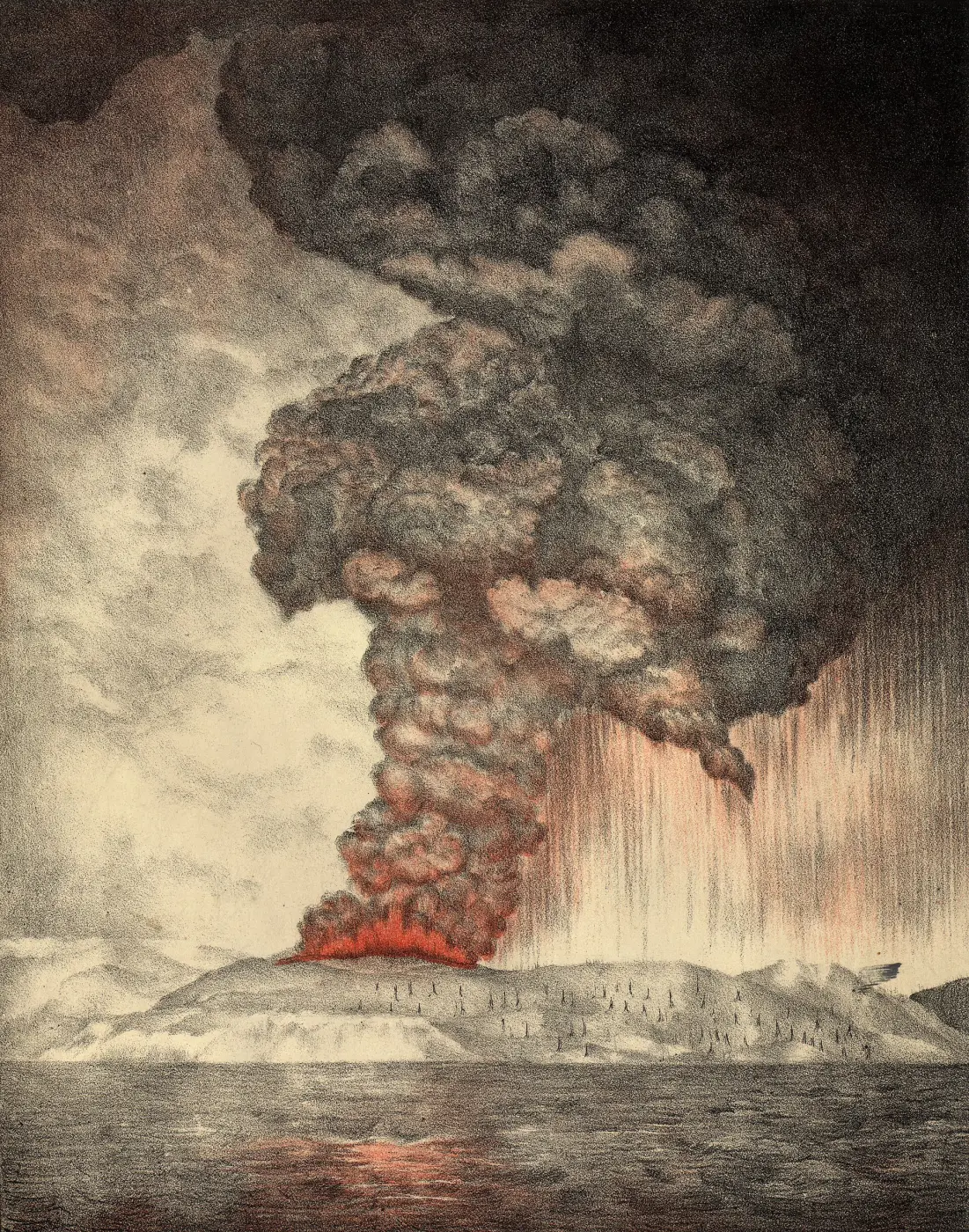
Illustration: Lithograph: Parker & Coward, Britain; · Public domain · Original
Loud enough to burst eardrums
The largest explosion, on 27 August 1883 at 10:02 a.m., is considered the loudest sound on record. In Batavia, 160 kilometers away, a pressure gauge went off the scale – equivalent to more than 172 decibels. Sailors about 64 kilometers away had their eardrums burst. At the volcano itself, the largest explosions were barely audible.
Your guess
How many times did some barometers record the pressure wave?
Not quite.
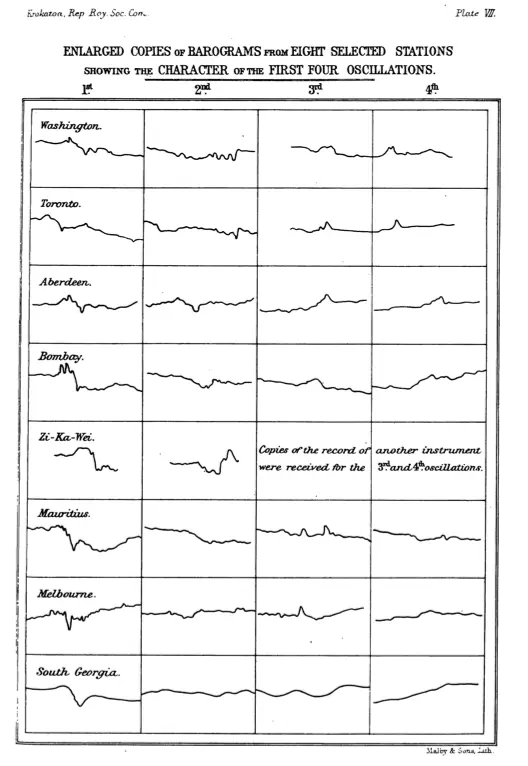
Seven times, spread over five days. The wave travelled four times away from Krakatoa to the opposite point on Earth near Bogotá, and three times back. It moved at almost the speed of sound.
From the Royal Society's 1888 report: barometer traces from eight stations, from Washington to South Georgia – column by column, the first four passes of the pressure wave.Visualization: Royal Society (Great Britain). Krakatoa Committee; Symons, G. J. (George James), 1838-1900, ed; · Public domain · Original
A bang that had to be measured
What travelled around the world was mostly infrasound: pressure swings too low-pitched for human ears. Ordinary weather barometers recorded them. Because the telegraph spread the news around the world within hours, local measurements gained global significance for the first time – the Royal Society later gathered the traces.
Fits with this
Nº 056 · History · 50 sec
What does a volcanic eruption have to do with Frankenstein?
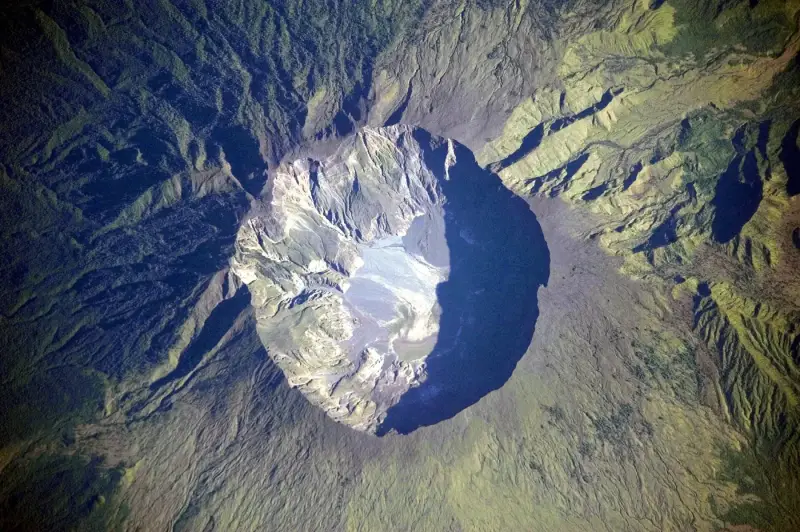
In 1815, Tambora explodes in Indonesia. A year later, an 18-year-old is stuck in endless rain on Lake Geneva – and invents a monster.