Slowed down by Earth
27daysfor one orbit – and one turn
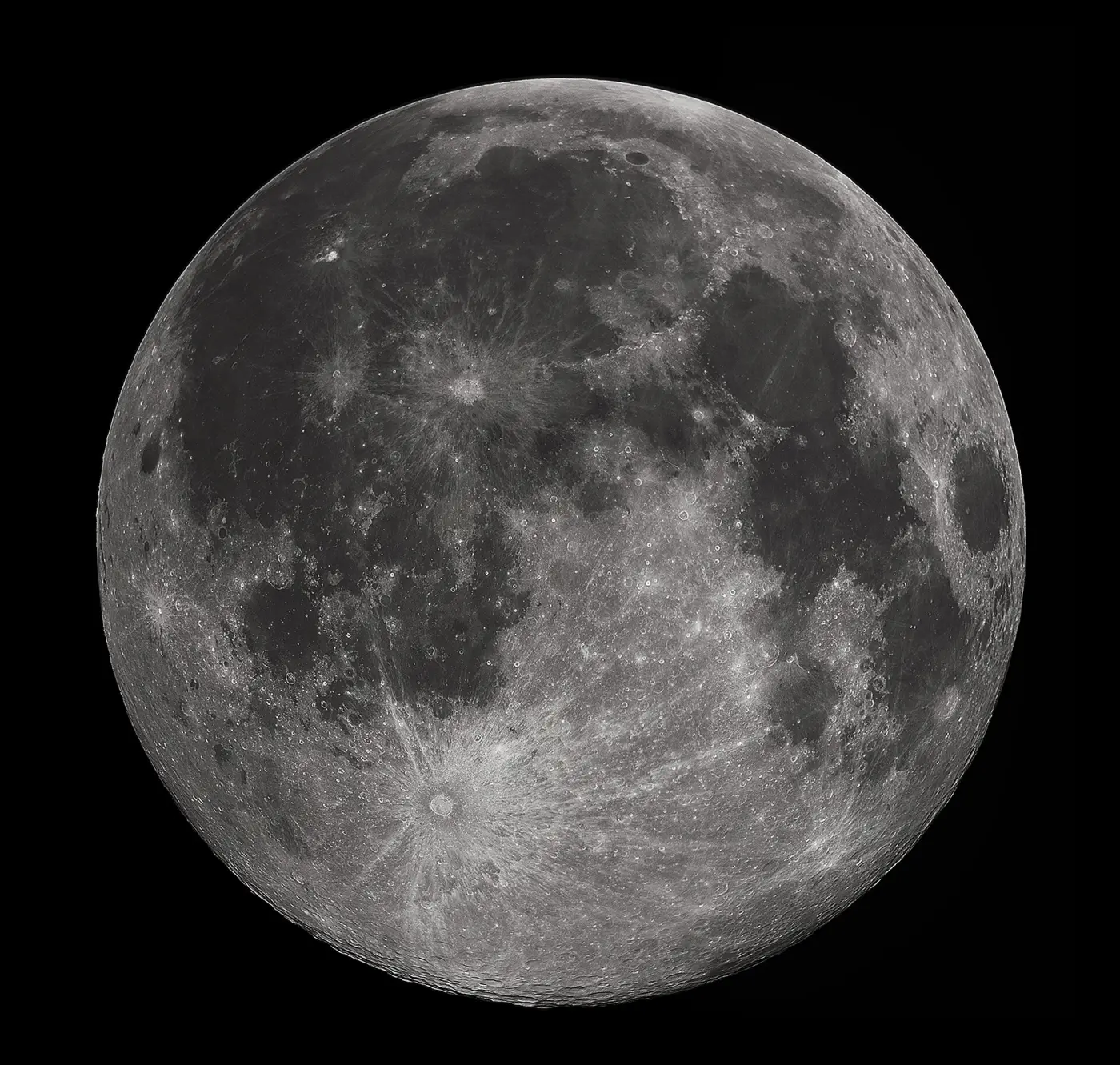
Shortly after it formed, the Moon spun much faster. Earth's gravity deformed it and tugged at that bulge. The flexing inside produced heat and slowed the spin – until one turn took exactly as long as one orbit. It has stayed that way ever since.
It isn't dark
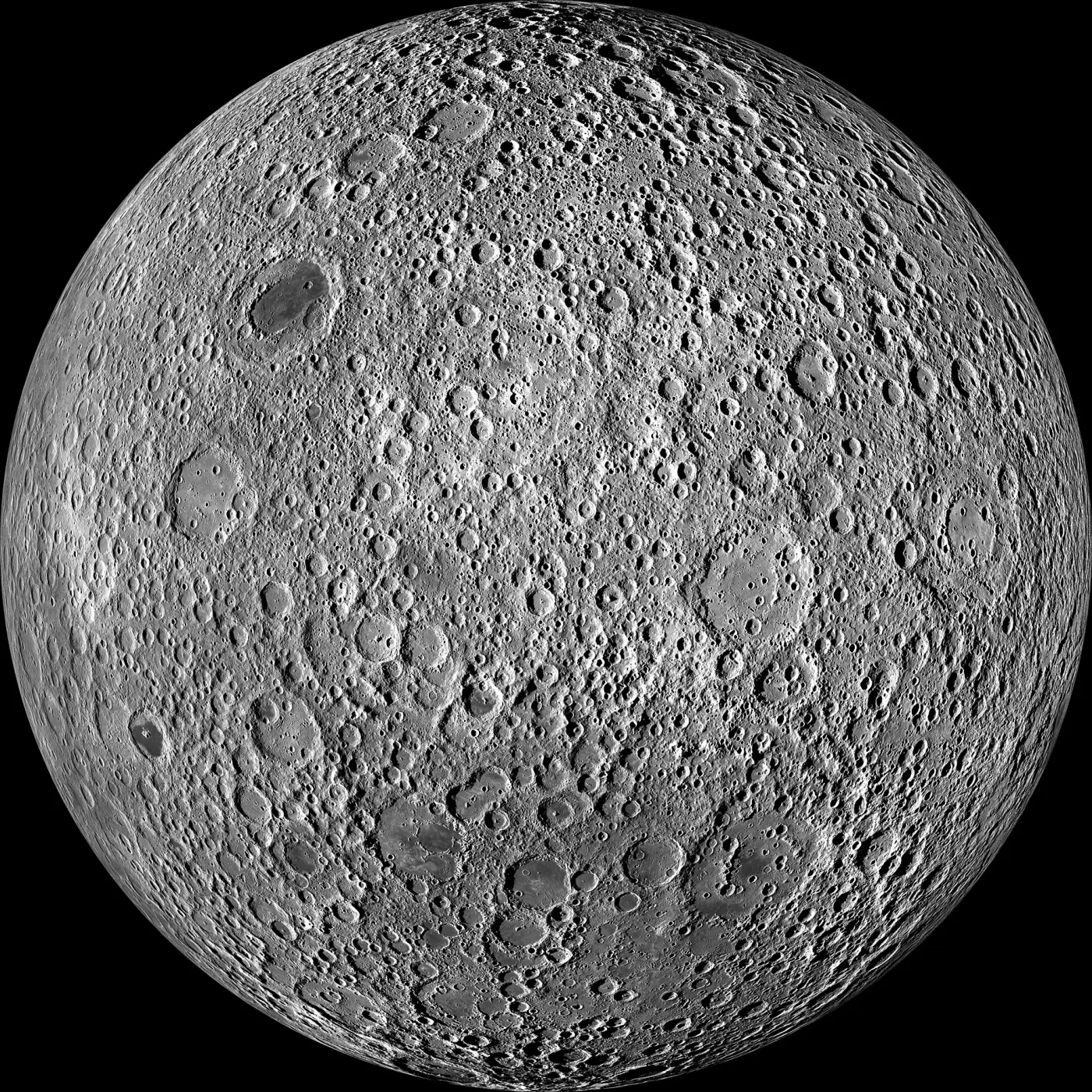
The far side is often called the "dark side". That's misleading: it gets just as much sunlight. At new moon it is even fully lit – while the side facing us is having its night.
A slight wobble
59%of the Moon's surface can be seen from Earth
It isn't perfectly exact. The Moon's orbit is slightly elliptical, so it moves faster and slower while spinning at a steady pace. This rocking is called libration – and lets us peek a little way around the edges.
Deep dive
The brake works both ways
What Earth did to the Moon, the Moon now does to Earth. Earth's oceans bulge out under its pull – and tug back on the Moon. That creates friction, which slows Earth's spin. As a result, the day gets longer: by a little under 2 milliseconds every 100 years. It sounds like nothing. But precise clocks pick it up within a few centuries – and over hundreds of millions of years it adds up to hours.
Continues in the app
- Where the energy goes
- The Moon is drifting away
- Shells as calendars
- One day Earth will be in step too
- Pluto and Charon are already there
- Mercury: close, but different
- Quiz with 3 questions
- 3 key points to keep