
A destination they've never seen
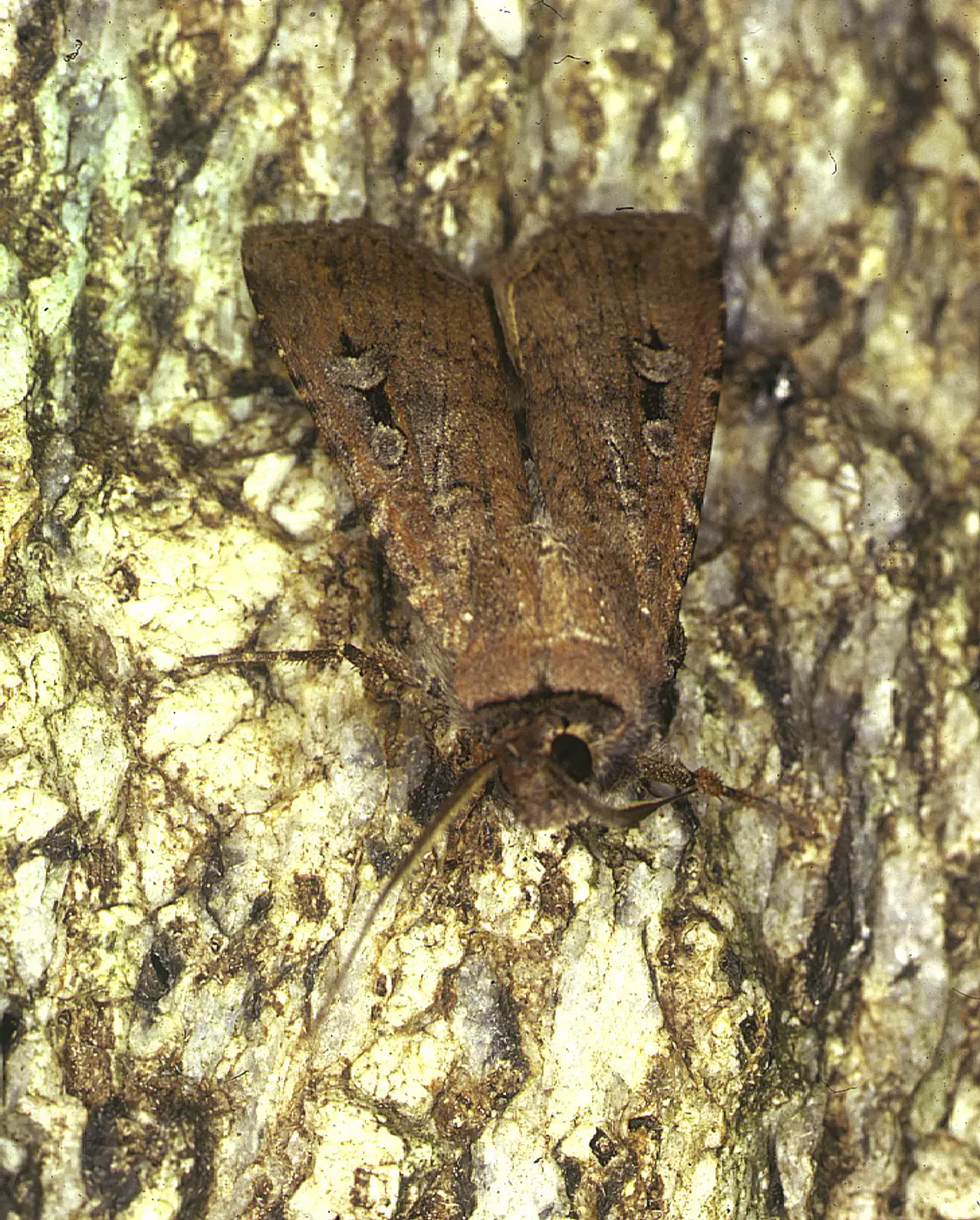
Every spring, billions of Bogong moths escape the heat of south-eastern Australia. Flying at night, they travel up to 1,000 kilometres to a handful of cool caves in the Australian Alps and spend the summer there at rest. In autumn the same moths fly back, breed and die.
A sky in the lab
A team led by Eric Warrant and David Dreyer at Lund University tethered moths in a flight simulator. Above them: a projected, moonless starry sky, with Earth's magnetic field cancelled out. The moths still flew in their migratory direction – south in spring, north in autumn.
Turn the sky, turn the moth
When the researchers rotated the starry sky by 180 degrees, the moths flew in almost exactly the opposite direction. When the stars were randomly rearranged – at the same brightness – they lost their bearings. So the moths read the pattern of the sky, not just where it is bright.
Neurons for the Milky Way
In the moths' brains the researchers found neurons that respond to rotations of the night sky. They fire most strongly when the moth is heading south. Some also responded to artificial cues mimicking the shape of the Milky Way and its brightest region, around the Carina Nebula.
What dung beetles can't do
Under cloud the moths still fly the right way – then the magnetic field is apparently enough. Dung beetles use the Milky Way too, but only to roll in a straight line. As far as is known, only humans and some night-migrating songbirds otherwise hold a particular compass direction by the stars.
.jpg)
