Oat flakes as cities
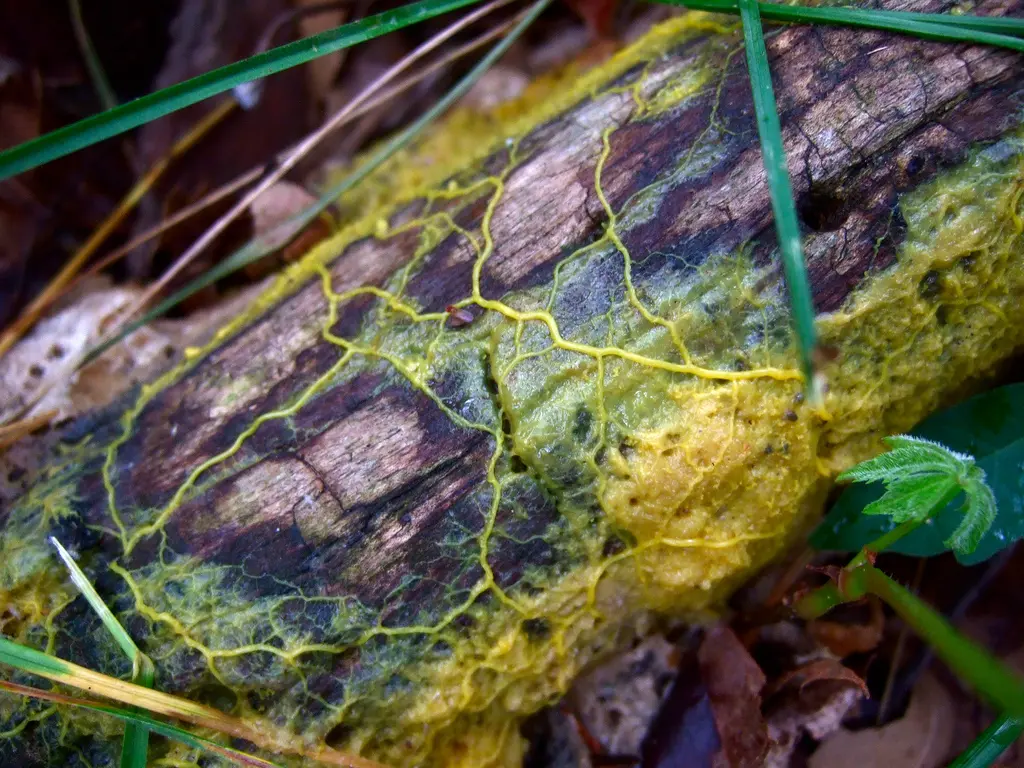
A team led by Atsushi Tero and Toshiyuki Nakagaki at Hokkaido University laid out oat flakes to match Tokyo and 36 surrounding towns. They placed the slime mould Physarum polycephalum on the spot for Tokyo. It is a single cell, visible to the naked eye, with many nuclei.
Everywhere first, then only what's needed
At first the slime mould spread out evenly. Then it reinforced the tubes between the flakes and let the others wither. After about a day it had built a network of nutrient-carrying tubes that looked very much like the rail network around Tokyo.
Your guess
How did the slime mould's network compare with the real railway?
What “similar” means
Three things were compared: the total length of the links – the cost. How short the routes between any two places are – the efficiency. And whether the network holds together when a link breaks at random – the fault tolerance.
Rules instead of a brain
The team turned the behaviour into a mathematical model: tubes with heavy flow thicken, redundant ones disappear. Rules like these could help build networks without central control, such as wireless sensor networks. In 2010 the work earned an Ig Nobel Prize for transportation planning.