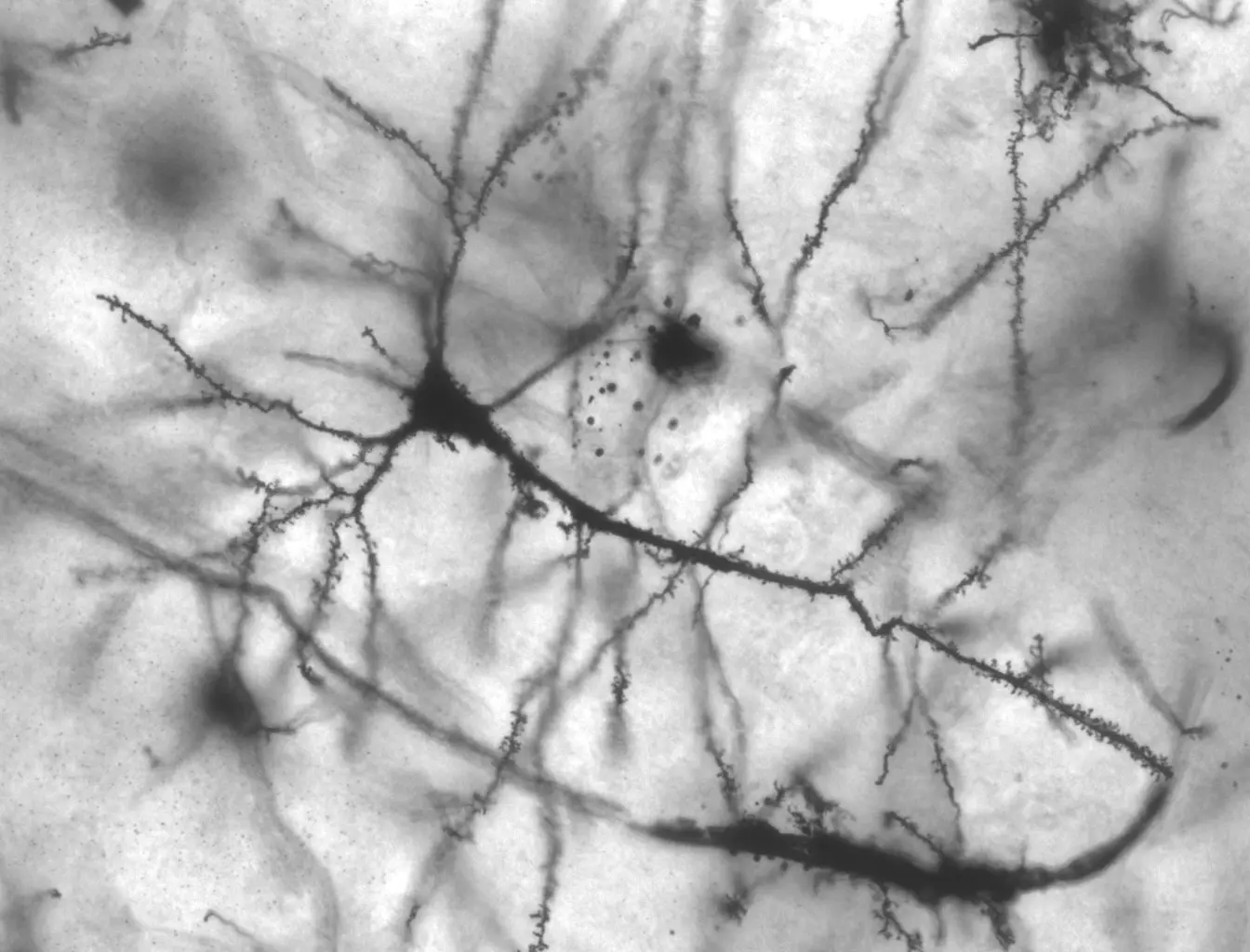
Modelled on nerve cells
An artificial neuron is a mathematical function modelled on real nerve cells. Its weights roughly correspond to the strength of connections between cells. Its output corresponds to the signal a nerve cell passes on.
How it computes
Each input is multiplied by its weight, everything is added up, and a fixed value, the bias, is added. The result runs through an activation function – here an S-curve that squeezes everything between 0 and 100 %.
So where's the learning?
Learning happens through the weights. If the network is wrong, it adjusts them a little so the next answer fits better. A neural network consists of many such units: each receives signals from others, processes them and passes on its own.